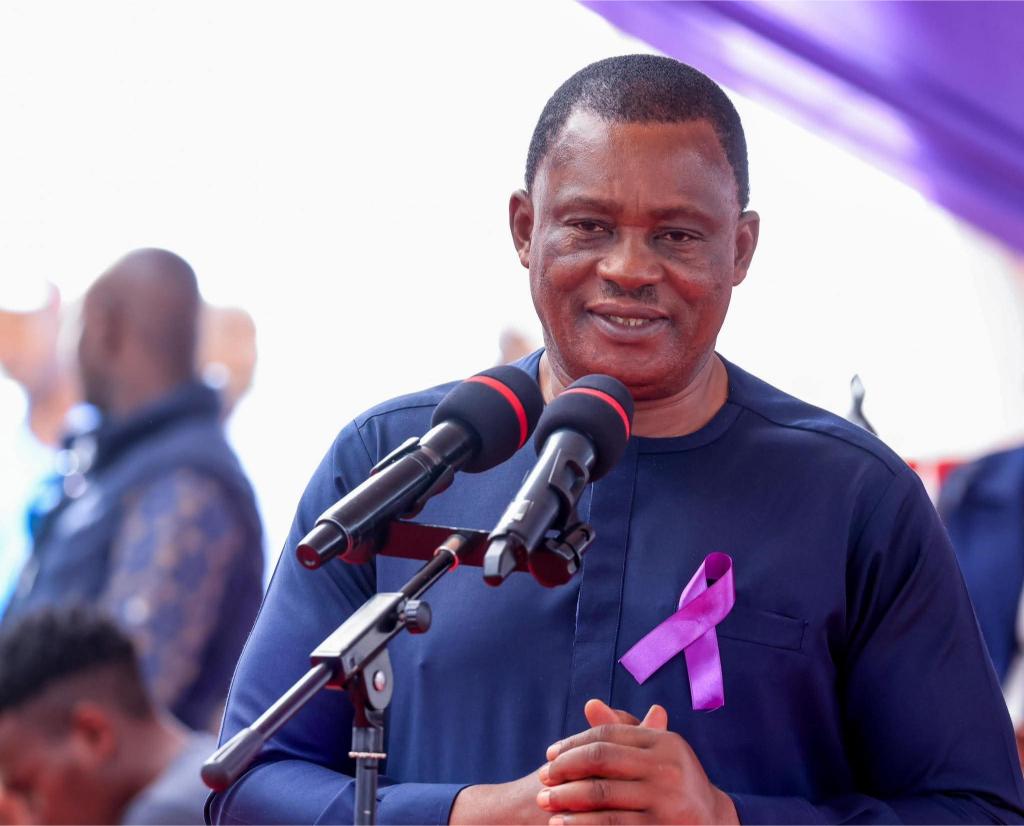
The Democratic Party of Kenya (DP) has blamed persistent inequality in secondary school placement on governance failures and mismanagement of devolved resources, arguing that the education crisis facing parts of the country is not about quotas but capacity and accountability.
In a statement issued by the Party Leader, Justin Muturi said the debate sparked by former Deputy President Rigathi Gachagua’s remarks on school admissions had exposed deeper structural problems in Kenya’s education system and political leadership.
“What has changed is not just money; it is the politics of responsibility,” Muturi said, noting that devolution was intended to transfer both resources and accountability to local leaders.
He argued that leaders who spend most of their time in Nairobi neglect the communities that elected them.
“Schools are not built by speeches. Laboratories do not appear through press conferences. Teachers are not trained by social media posts,” he said.
Muturi said anger from residents of North Eastern Kenya had been misinterpreted as ethnic resentment, when in fact it reflected frustration with local leadership.
“The fury from North Eastern residents directed at their own elites is therefore deeply democratic,” he said. “They are asking a radical question: where did the money go?”
He pointed out that for more than a decade, county governments have controlled education-adjacent budgets, including bursaries, early childhood education, school infrastructure and support to national schools.
In addition, Members of Parliament have managed billions of shillings through the National Government Constituencies Development Fund (NG-CDF).
Despite this, Muturi said, the visible transformation of the schooling landscape in many counties has been minimal.
“This is not marginalization. This is mismanagement,” he said.
The DP leader said the controversy had also highlighted growing inequality within regions, not just between them.
“While villages lack science labs, political families educate their children in Nairobi academies and foreign universities,” he said.
He added that many rural schools still lack basic amenities such as electricity, even as leaders move in convoys through the same dusty roads.
“This is what political economists call elite insulation — the ability of those in power to escape the consequences of their own failure,” Muturi said.
“When leaders do not use public schools, they feel no urgency to improve them.”
Muturi argued that the debate on school placement had struck a nerve because it reflects a wider struggle between citizens and a political class disconnected from everyday realities.
“It is no longer a fight between Mount Kenya and North Eastern Kenya,” he said.
“It is a fight between ordinary citizens and a political class that has learned to outsource its own children’s futures while managing everyone else’s misery.”
According to the DP leader, communities are not angry because their children are treated unfairly during placement, but because leaders failed to build schools capable of producing competitive candidates in the first place.
“Kenya’s education crisis is therefore not about quotas; it is about capacity,” Muturi said, arguing that regions with dense networks of well-equipped secondary schools naturally produce more candidates for national placement.
He reiterated that unless leaders take responsibility for building and equipping quality schools at the local level, debates on fairness and equity in admissions will persist, masking what Muturi described as a fundamental failure of leadership and governance.































Comments
Sign in with Google to comment, reply, and like comments.
Continue with Google